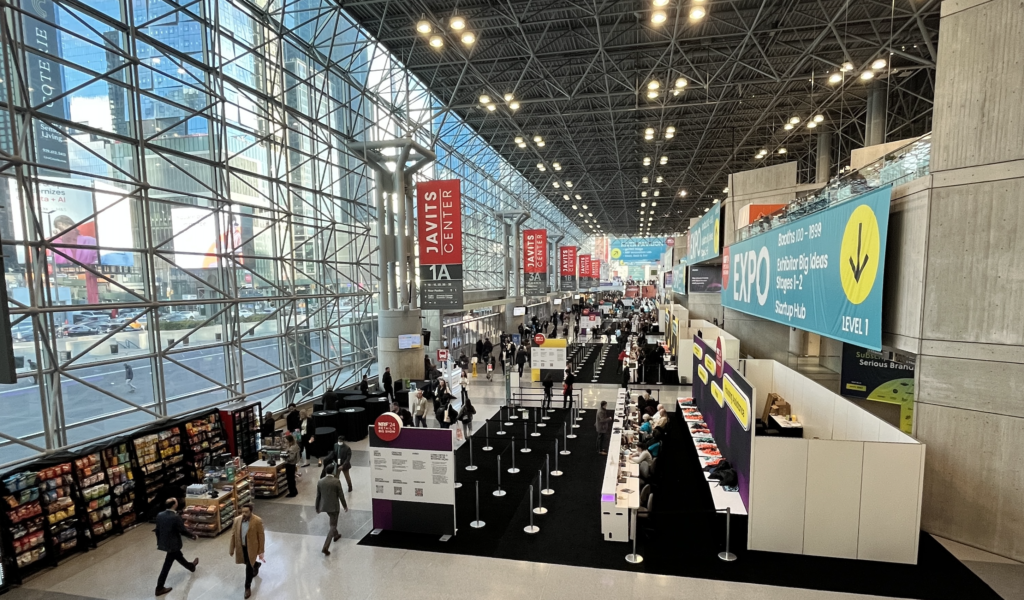
NRF 2024, also known as Retail’s Big Show in NYC, was bustling with excitement. The UpStart Commerce team was there for the three-day conference, learning about retail’s newest technologies and trends. With activities spread across five floors, the event provided numerous insights. Here, we highlight the main trends seen at NRF Retail’s Big Show 2024, featuring lessons from well-known retail brands and technology companies, providing a sneak peek into the industry’s future.
Personalization and the People-First Approach
Building Customer Relationships and Loyalty
Retailers know that the customer experience is key to driving sales and retaining customers. During a session with Ulta Beauty CEO Dave Kimbell, he shared insights into their retail strategy. He emphasized the importance of personalization and putting people first to connect with customers.
Ulta’s loyalty program is a key element in its customer-centric approach, with over 42 million members and linked to more than 95% of sales. Kimbell aims to make their loyalty program the most rewarding, not only in beauty but across all of retail.
Ulta’s MUSE Accelerator Program
Ulta Beauty CEO Dave Kimbell explained that Ulta Beauty is committed to fostering innovation and supporting emerging BIPOC (Black, Indigenous, and People of Color) founders. One of the ways that they do this is through Ulta’s MUSE Accelerator program. The MUSE Accelerator program focuses on supporting underrepresented founders of color by providing in-depth training, business tools, and brand-strengthening experiences.
Incorporating AI to Increase Personalization
Innovation is central to Ulta Beauty’s focus, extending to technology like AI, smart vending machines, and robotic beauty services. Despite the role of technology, Kimbell emphasizes the importance of the human experience. Ulta Beauty’s 50,000 associates aim to provide a personalized, one-on-one experience for customers in stores and salons. Virtual try-on opportunities, skin diagnosis, and personalized features enhance the customer experience. AI, particularly in personalization and virtual chat, is a key focus, with Ulta Beauty actively investing in small companies shaping the future of beauty tech.
More Than Just a Beauty Brand
Dave Kimbell explained the company’s purpose is to help customers discover beauty rather than striving to make them beautiful. Ulta Beauty’s commitment to diversity and connecting with its guests is reflected in its mission to highlight everyone’s unique beauty. Ulta Beauty’s success story revolves around personalization, innovation, and a people-first philosophy that embraces diversity, making it a standout in the retail industry.
Lessons from a Retail Industry Leader
Learning from Levi Strauss & Co. at NRF 2024
One great opportunity for NRF attendees is listening to industry leaders and learning from their experiences. Michelle Gass, President at Levi Strauss & Co., spoke with Matthew Shay, president and CEO of NRF, highlighting her background and the lessons she learned along the way. Gass feels that her experience at Kohl’s, Starbucks, and Procter & Gamble prepared her for her current role. She expressed “Being here at this moment is the culmination of everything I’ve done.”
International Reach for Retail
Retailers can draw inspiration from Levi’s international success story. Levi’s is now located in 110 countries with 3,000 stores, showcasing the opportunities to expand beyond domestic borders. Gass and Bergh explored markets like Asia, witnessing notable growth, particularly in ecommerce. Visits to various locations such as Shanghai, Tokyo, India, the Philippines, and Thailand showed a wide range of opportunities. Their travels outside of the U.S. highlighted the various international prospects that are available to retailers and the importance of testing new markets.
5 Key Learnings
Michelle Gass’s five key learnings include the power of a brand, consumer focus, innovation, omnichannel thinking, and commitment to purpose and values, which provide valuable insights for business leaders. Examples like Starbucks’ pumpkin spice latte and Kohl’s partnership with Amazon illustrate the significance of innovation and anticipating consumer needs.
Ethical Business Practices
Gass’s emphasis on driving profits through principles and living by the company’s purpose and values reinforces the importance of ethical business practices. Her optimism about Levi’s future, maintaining its iconic status while expanding into a “top-to-bottom denim look,” reflects the importance of staying true to core brand identity while adapting to new market trends. Gass’s journey offers lessons in leadership transition, global business understanding, innovation, and integrating purpose and values into business strategy.
Revolutionizing Retail Supply Chains
Meeting Customer Expectations with Supply Chain Management
Small and mid-size retailers are exploring ways to meet diverse consumer purchasing expectations. The NRF Supply Chain 360 Summit highlighted how national retailer Northern Tool + Equipment adapted its supply chain for flexibility, offering valuable lessons for the industry. Their journey can be a guide for retailers who want to enhance their supply chain management.
Optionality Framework for Supply Chain Challenges
Suresh Krishna, the CEO and president of Northern Tool + Equipment, stressed the importance of the “optionality” framework developed by the company’s supply chain team in response to COVID-19 challenges. This framework enhances customer service and improves speed in the supply chain. A notable aspect of Northern Tool + Equipment’s strategy addresses challenges by redirecting shipping container flow from the Port of Los Angeles to the Port of Charleston on the East Coast. This decision was part of a larger effort to boost speed and resilience in the supply chain.
Eliminating Single Source Reliance
Diversifying sourcing locations was a crucial element of the optionality framework. With over 100,000 items in its inventory, including imports from China, the company aimed to reduce reliance on a single source. Establishing offices in India, Vietnam, Mexico, and Taiwan allowed Northern Tool + Equipment to diversify its sourcing, resulting in less than 50% of imported products coming from China.
Improving Ecommerce Fulfillment
The company’s commitment to ecommerce innovation was evident in optimizing order fulfillment through data and technology. Northern Tool + Equipment distributed inventory across multiple warehouses, reducing delivery times. The adoption of a ship-from-store model improved ecommerce fulfillment, with 99% of orders now shipped on the same day. This is a significant improvement from 17% three years ago. The incorporation of ship-from-store not only expanded geographic reach but also significantly reduced delivery times, meeting the growing demand for faster and more flexible shipping options.
Embracing Sustainability in Retail
Sustainability at a Strategic Level
Embracing sustainable business practices is an important strategy for businesses aiming for long-term success. PepsiCo Foods North America CEO, Steven Williams, talked about how his company is investing in sustainability at a strategic level. He highlighted the importance of businesses prioritizing the well-being of both people and the planet. Facilitated by Michael Jeschke of Deloitte Consulting, their discussion emphasized the critical role of sustainability in shaping the future of consumer retail.
“Future of the Consumer”
Jeschke introduced the “Future of the Consumer”, a two-year research initiative involving 1,000 industry leaders. It discussed the forces driving the future and the necessary business changes. These catalysts are changing old ways and compelling businesses to rethink strategies for a sustainable planet. Jeschke emphasized that companies integrating sustainability will be better positioned for success.
PepsiCo Positive Initiative
The PepsiCo Positive initiative outlines its commitment to sustainability, aiming for net-zero emissions across the entire value chain by 2040. Frito-Lay and Quaker, key parts of PepsiCo, have made progress with offices and plants in the U.S. and Canada powered by 100% renewable energy. The Modesto, CA location reduced emissions by 90%, and biomass technology at another California site saves millions of gallons of water annually.
Sustainability as a Team Sport
Williams stressed the collaborative nature of sustainability, calling it the “ultimate team sport.” He highlighted the importance of all stakeholders moving in the same direction. The collaboration extends to partnerships with retail allies, like the $120 million commitment with Walmart to drive regenerative agriculture, to reduce or remove 4 million metric tons of greenhouse gas emissions by 2030.
Resilient Future in the Food Retail Industry
Williams outlined a roadmap for retailers to improve sustainability through collaboration, ambitious goals, and integrating sustainability into their organizational structure. The PepsiCo Positive initiative serves as a compelling example of a major player leading the charge toward a more sustainable and resilient future in the food and retail industry.
Exploring the Impact of Generative AI on Retail
Soti Inc. Partnership
Many of the discussions at NRF 2024 highlighted the significance of adopting AI in retail. Tractor Supply Company, a Fortune 300 retailer with over 2,200 stores serving rural customers, integrated AI into its operations using SOTI MobiControl. Shash Anand, Senior Vice President of Product Strategy at SOTI, and Glenn Allison from Tractor Supply Company discussed how generative AI can empower team members and improve the customer experience.
Enterprise Mobility Management (EMM)
SOTI MobiControl offers comprehensive Enterprise Mobility Management (EMM), providing visibility and control over the performance, activities, and security risks of your business-critical mobile devices. SOTI’s AI capabilities extend beyond product recommendations, incorporating advanced diagnostic features for efficient issue resolution. Predictive capabilities help manage swappable batteries, ensuring optimal device performance.
“Hey GURA”
Another example of AI implementation is Tractor Supply Company’s customer service application. Ten years ago, Tractor Supply created a tech assistant named “GURA” (short for “Greet, Uncover, Recommend, and Ask”). Powered by Microsoft’s Azure, “Hey GURA” has transformed into a real-time knowledge base for store associates. The AI application serves as a valuable tool for answering queries, providing product information, and supporting store operations. Tractor Supply Company’s use of AI showcases how it can enhance customer service, operational efficiency, and team member engagement.
Economic Projections for 2024
Recession Not Likely
For retailers concerned about the future, CNBC senior economics reporter Steve Liesman shared insights into the economic outlook for 2024. Despite concerns, Liesman delivered a reassuring message, saying, “You don’t have to load up on cans of tuna and go into your basement.” He dismissed the idea of an imminent recession. Instead, he affirmed that the economy is expected to grow relatively slowly in the coming year, slower than before, but a recession is not looming.
Current Economic Situation for Retail
Reflecting on recent economic trends, Liesman presented charts depicting the complexity of the current economic situation. He described the period as “really extraordinary” and showcased the impact of factors like declining inflation and above-potential growth. Consumers, supported by government assistance, higher wages, and low unemployment, played a crucial role in maintaining spending levels.
Economic Uncertainty Post-Pandemic
However, Liesman acknowledged the challenges of creating accurate charts due to the “tidal wave” caused by COVID-related disruptions. He emphasized the need to understand this economic wave, likening it to visiting an island post-hurricane without knowledge of the storm. Addressing the Federal Reserve’s motivations, Liesman discussed historical peaks in inflation charts and the fear of a second peak influencing current decision-making. He highlighted the expectation that interest rates would come down in the short term, contrary to earlier predictions of a recession.
CNBC/NRF Retail Monitor
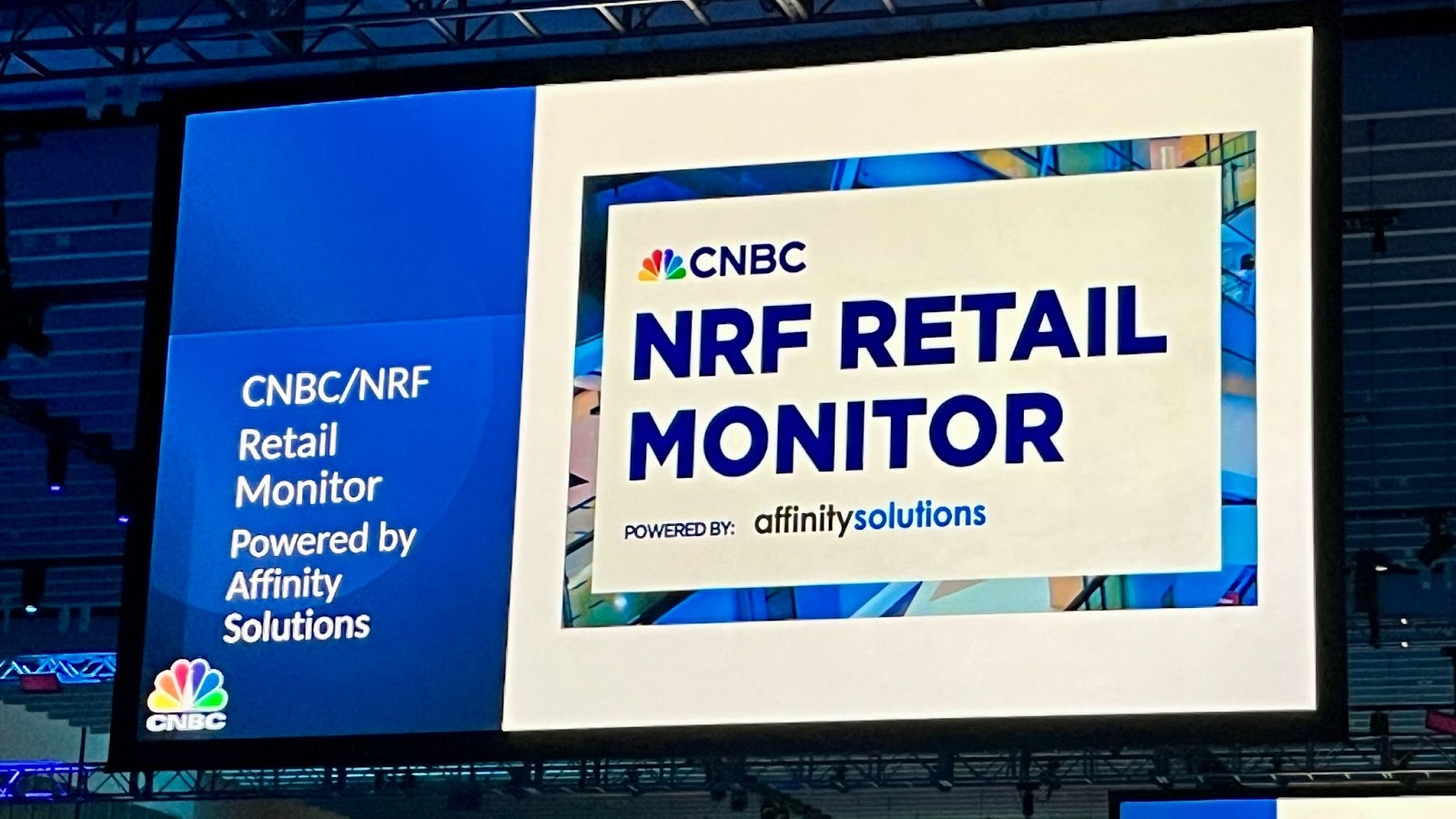
Like many businesses at NRF in 2024, CNBC has found a way to incorporate AI into its processes. Liesman concluded his session by introducing the CNBC/NRF Retail Monitor, powered by Affinity Solutions, as a valuable tool for forecasting. Leveraging anonymized data from millions of credit and debit cards, the monitor provides insights into U.S. retail sales. It can provide better economic predictions for the year ahead.
NRF 2024 Takeaways and Looking Forward
In conclusion, NRF 2024 Retail’s Big Show provided a deep dive into trends that are shaping the future of the retail industry. The event showcased sessions from retail industry leaders like Ulta Beauty, Levi Strauss & Co., Northern Tool + Equipment, PepsiCo Foods North America, and Tractor Supply Company.
As the retail industry continues to evolve, their insights provide invaluable guidance for businesses overcoming challenges in the new year. This conference has become a central hub for retailers to share emerging innovations, strategies, and forward-thinking visions. And for a good reason. The lessons from the NRF 2024, driven by innovation, sustainability, and economic predictions, can be a great resource for businesses looking to expand their brands.